


Line maintenance refers to the regular inspections, repairs, and maintenance tasks performed on aircraft to ensure their safe operation. These checks are conducted at airports and are essential for maintaining airworthiness, as well as preventing unexpected issues that could disrupt flight schedules. Line maintenance plays a crucial role in keeping aircraft safe, reliable, and airworthy. These routine maintenance checks, performed between flights or during layovers, ensure that aircraft meet stringent operational standards. During a line maintenance check, several critical tasks are performed to assess the aircraft’s condition and address any immediate maintenance requirements. Here are some key activities conducted: Visual...

Exploring the Benefits of Outsourcing Aircraft Maintenance
In the dynamic and complex aviation industry, airlines face the constant challenge of ensuring efficient and reliable aircraft maintenance while managing costs and resources effectively. One solution that has gained significant popularity is outsourcing aircraft maintenance to an Approved Maintenance Organization (AMO). By entrusting maintenance tasks to specialized providers, airlines can reap numerous benefits. Cost Savings and Operational Efficiency Outsourcing aircraft maintenance can yield substantial cost savings for airlines. By partnering with a maintenance provider, airlines can avoid capital investments in infrastructure, equipment, and specialized facilities. Outsourcing eliminates the need for maintaining a dedicated in-house maintenance team, reducing overhead...

On-Time Performance: What Is It and How Is It Achieved?
In the aviation industry, punctuality is crucial. On-time performance (OTP) plays a pivotal role in ensuring customer satisfaction, operational efficiency, and overall success for airlines. Achieving and maintaining a high OTP is a complex task that involves meticulous planning, streamlined operations, and a commitment to excellence. Understanding On-Time Performance OTP refers to the ability of an airline to depart and arrive at their scheduled times. It is typically measured by comparing the actual departure and arrival times of flights against their planned schedules. OTP is expressed as a percentage, with a higher percentage indicating better performance. For passengers, an airline’s...

3 Things You Must Know About eVTOLs
As the world progresses towards increased connectivity, mobility, and sustainability, one segment is becoming increasingly in-demand: electric Vertical Take-Off and Landing (eVTOL) aircraft. The concept first emerged in 2009, with NASA’s Puffin eVTOL gaining viral fame online. Today, Airbus, Boeing, Embraer, Honda and other big players in the industry have joined in on developing this innovative aircraft type. So, what exactly are eVTOLS? Here are 3 things every aviation enthusiast should know. They are essentially “flying cars” Source In layman terms, an eVTOL is like a car that flies, transporting you to your destination via air, instead of having...

Do You Know What These Runway Lights Mean?
Have you ever looked out the window on approach to your destination and wondered what the million dazzling lights mean, and how do pilots and ground personnel decipher them? Here’s a quick guide to what these common runway and lighting systems mean: Runway Edge Source These are white lights that outline runway, at 3 metres from the outer edge of the runway, with the distance between each light not exceeding 60 metres (or 100 metres for non-instrument runways). You might notice that the last one-third of the runway length is indicated with yellow Runway Edge lights, instead of white....

5 Ways to Boost Your Aviation Employability Post-COVID
It’s no doubt that the aviation industry took a big hit during the pandemic. Unfortunately, many aviation professionals lost their jobs as a direct result of extended lockdowns and border closures – but on the flip side, this means that there is an abundance of available roles to be filled, now that the industry is picking up. Are you ready to move forward and onward, towards accelerated recovery as the demand for air travel bounces back like never before? Here are 7 useful tips to prepare yourself in becoming more employable in the aviation industry, whether you’re looking to bounce...

Is There Potential in Aftermarket Parts Post-COVID?
The Aftermarket Parts market is comprised of new and used rotable parts that are available as spares for aircraft components. The term ‘Aftermarket Parts’ is a blanket term, classified by the aircraft type (wide-body, narrow-body, regional), and further segmented by component and parts type (e.g., whether it is MRO Parts or Rotable Replacement Parts). Asia Pacific has been predicted to be the fastest-growing and largest market, with a forecasted (Mordor Intelligence) Compound Annual Growth Rate of over 4% between 2021 and 2026. Source Key trends Narrow-bodies are expected to lead the market (62% market share by 2026), with the...
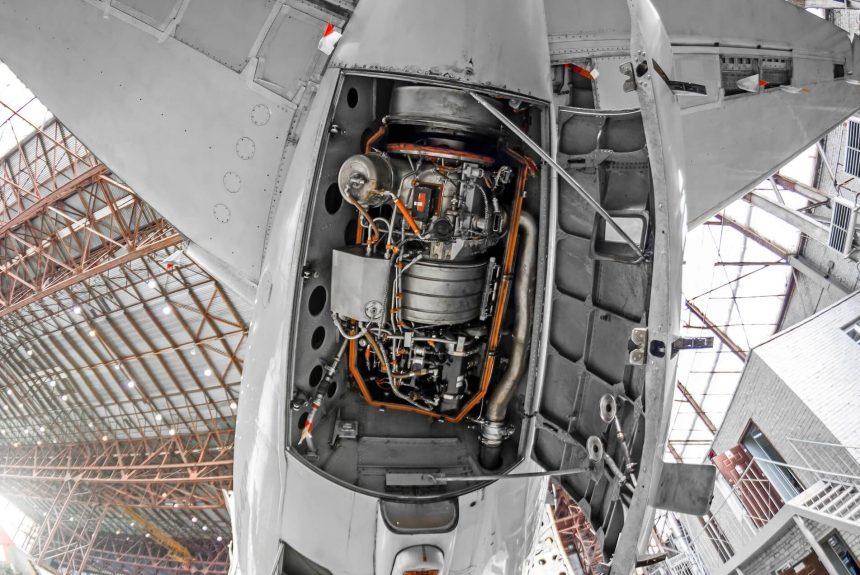
How Does It Work: Auxiliary Power Unit
An Auxiliary Power Unit (APU) is a component found in fixed-wing aircraft, near the rear of the fuselage. It functions as an additional energy source, used to start up one of the main engines. It can be found in many medium to large jets – and some turboprops – while smaller civilian jets do not have them (due to weight limitations). A Brief History of APUs Source APUs date back to aircraft produced in the 40s, during World War II, such as the Boeing B-29 Superfortress. Flying Magazine describes it “like a motorcycle engine installed inside the fuselage”. In...

5 Must-Haves to Include in Your AME/Technician Resume
Source Whether you’re currently looking for a job, or you’ve already got a job, it’s important to always keep your resume updated. Reviewing your resume at least once every six to twelve months will ensure that you have the best possible version – after all, this is what stands between you and the job you want. You should also make it a habit to update your resume whenever you complete a project or training course, or when you get a promotion. Dviation AMEs and technicians (Source: Dviation Group) You probably already know the key points to include in your resume:...

The Future of Aviation: Chartered Flights & Private Jets?
Chartered flights – air transport for smaller groups of passengers compared to large commercial airliners – are often operated on private jets (also known as business jets, or bizjets). What comes to mind when you hear the words ‘private jet’? If you’re like most people, you’ll probably think: luxury, status and class. We often associate private jets with VIPs, celebrities and the ultra-affluent. However, with on-going COVID-19 concerns, the private jet sector has indeed grown beyond this market. Source Recently, there has been a surge in demand for chartered flights and private jet travel. Not only are chartered flights being...