


Aircraft maintenance is made up of a number of elements: apart from the actual physical act of maintaining aircraft, a great deal of planning and careful consideration have gone into laying out the maintenance process. From the Maintenance Planning Document, to the Approved Maintenance Program, and all the details in between, aircraft maintenance constitutes a complex tree of processes, procedures, and parts. One such part is the reliability program. Source: Sassofia Purpose Reliability programs are mandatory and serve an important purpose. Their basic functions are to reflect the effectiveness of the maintenance program and the way in which maintenance is carried...

Regulations On Drones & Other Unmanned Aircraft Systems
With the recent rise in popularity of drones and Unmanned Aircraft Systems (UAS), there are growing concerns regarding the safety, privacy, and legal aspects of UAS operations. In response, the Civil Aviation Authority of Malaysia (CAAM) has established a set of regulations regarding the usage of UAS. Be it for leisure, photography or surveillance purposes, you should familiarize yourself with these regulations, to operate your UAS safely and legally. Source: medium.com To fly your UAS, you do not need authorization. However, you must be satisfied that the flight can safely be made, and must maintain direct and unaided visual contact...

Labour Shortage: A Pressing Issue In The Asia Pacific Aviation Industry
It is no surprise that the aviation industry in the Asia Pacific region is booming at an increasingly rapid pace. Attributed to the region’s economic growth, increased air travel is inevitable. In fact, Boeing predicts that the Asia Pacific will lead global demands for new aircraft, claiming up to 40% of all new passenger aircraft deliveries. As such, the need for pilots, technicians, and cabin crew over the next twenty years will be greatest in the region – amounting to over 261,000 pilots, 257,000 technicians, and 321,000 cabin crew. Source: Dviation Group In a separate prediction by the Vice President...

The Difference Between Line, Base and Component Maintenance
If you… a. are curious about aircraft maintenance b. are looking to join the industry c. are simply tired of explaining to people what your job is … then this article was written specially for you! Many people who are not involved in the aircraft Maintenance, Repair and Overhaul (MRO) industry tend to think that maintenance is just ‘fixing aeroplane things’. They don’t understand that the person who repairs engines is unlikely to be the same one who can replace cabin interiors! So, in this article, we will discuss three types of aircraft maintenance that constitute varying levels and types...
The Dangers of Aircraft Maintenance
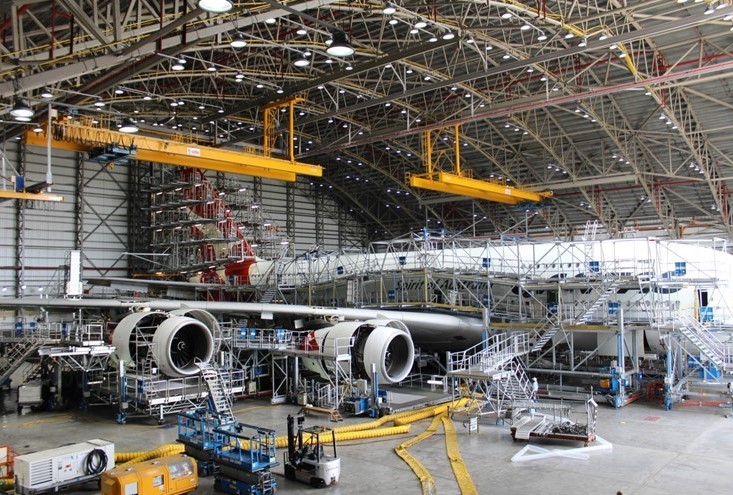
The aviation industry comes with many potential hazards, especially to those who work in it. The presence of hazards (anything that causes harm, damage or injury) is inevitable, and is exceptionally common when working around large machinery and moving parts – the most apparent source of hazards is an aircraft itself! Source: aviationmaintenance.edu Aircraft maintenance, in particular, involves regularly working close to large structures, sharps parts and turbine blades. This means that extra precaution needs to be taken when in the workplace, be it a hangar, ramp or workshop. Nonetheless, that doesn’t mean that aircraft maintenance is a deadly field...

Outsourcing Aircraft Maintenance – What, Why, How?
The global aircraft fleet is expected to reach nearly 38,000 by 2028. With this expansion, the aircraft maintenance, repair and overhaul (MRO) industry will expand to a consolidated market value of US$ 115 billion dollars. But one question that persists throughout the industry is: does outsourcing maintenance really benefit airlines? This article explores the pros of subcontracting maintenance, and how this can be advantageous to both full service and low-cost airlines. What is MRO? MRO refers to maintenance services that include the rebuilding, alteration and inspection of aircraft. It also includes the supply of spare parts, accessories, raw materials and...

Flight Recorders: How Do They Work?
Have you ever wondered how a flight recorder can be retrieved from wreckage in a seemingly unharmed state? Or how it’s able to provide enough information for accident investigators to recreate the flight? Well, you’re not alone! Read on to find out how flight recorders work! The Eyes and Ears of an Aircraft A flight recorder – or black box – is an electronic device that is carried on aircraft as a means to facilitate investigations of accidents and incidents. The two flight recorder devices, namely, the Flight Data Recorder (FDR) and Cockpit Voice Recorder (CVR) stores information on the...

Out With Paper Charts, In With Digitised Displays
Paper Charts: Soon To Be A Thing of the Past It comes as no surprise that flight documents are moving away from paper format. Instead, charts and maps are now progressing towards digitised forms. This transition comes as an effective and beneficial improvement throughout the commercial and general aviation industries, as well as in the military, where operations are highly sophisticated. See link for more info on market leaders JEPPESEN FLITE DECK PRO The Digitising Medium Compressed ARC Digitised Raster Graphics (CADRG) is a format through which charts and maps can be digitised. CADRG image data is equipped to provide...

Thinking of Buying Your Own Aircraft? What Next?
Buying your own aircraft is unbelievably exciting yet daunting. The thought of owning your own plane promises fun times ahead – but the first few stages are crucial in ensuring a smooth-sailing journey. Not sure what steps to take for a successful purchase? Read on! Set a Realistic Budget and Stick To It! Source: www.southeusummit.com One of the first things to consider is deciding if you want to buy a new or used aircraft. This then helps you set a budget that won’t be unrealistically low (or high). Bear in mind that unplanned expenses are bound to arise along the way,...

4 Reasons Why Human Factors Is Crucial In Aviation
Human Factors is a study on human performances at work due to the effects of environment, organization, and human characteristics. These factors limit our capability to perform to our best and inevitably, may impact on safety of the products or services we deliver to the travelling public. Human Factors plays a big role in aviation safety. According to Boeing, approximately 80% of air accidents are due to human error. This is why the understanding of Human Factors is extremely important. While you may have already learned about Human Factors at some point, there are a string of implicit reasons that...